|
Clough Bilinear Stiffness Degrading Model
|   |
|
Clough Bilinear Stiffness Degrading Model
| |
The Clough Bilinear Stiffness Degarding model is an evolutionary model that exhibits a degraded stiffness when unloaded that is dependent on the current state of the model and on the largest previously reached displacement in a given direction. The change in stiffness occurs when the force crosses the zero force line. In general, the stiffness is degraded such that the force follows a line that ends at the maximum previously reached displacement in the unloading direction. The model is based on the original model by Clough (1966).
Figure 27 illustrates the hysteresis rules of the original Clough model. A minor deficiency of the Clough model was identified by Mahin and Bertero (1975). See the Modified Clough Model for the differences in the hysteresis rules.
References:
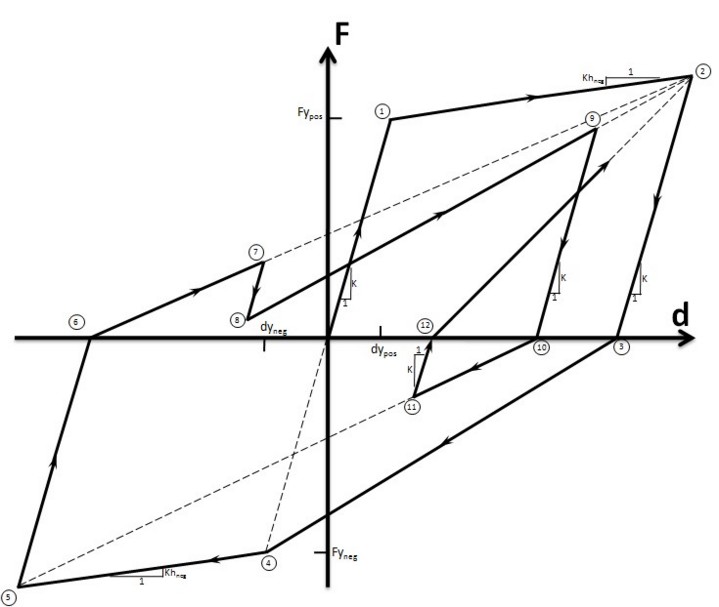
Figure 27: Hysteresis Behavior for the Clough Bilinear Stiffness Degrading Model