|
Modified Clough Bilinear Stiffness Degrading Model
|   |
|
Modified Clough Bilinear Stiffness Degrading Model
| |
Mahin and Bertero (1975, 1976) noted a minor deficiency in the Clough model. They noted that when unloading from a part of the curve with reduced stiffness (branches 7-8-9 and 9-10-11-12 in Figure 27), the reloading branch is still directed towards the largest point which is not always realistic. They proposed a modification whereby upon reloading, the response is directed toward the last unloading point, after which the response is directed back to the maximum prior displacement in that direction (branches 7-8-9 and 10-11-12-13-14 in Figure 28).
Figure 28 illustrates the hysteresis rules of the modified Clough model.
References:
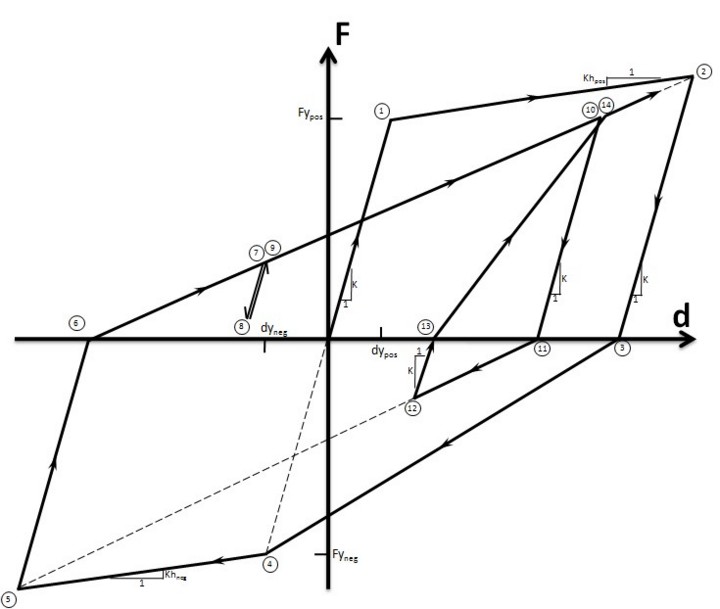
Figure 28: Hysteresis Behavior for the Modified Clough Bilinear Stiffness Degrading Model