|
Bilinear Plastic Model
|   |
|
Bilinear Plastic Model
| |
The Bilinear Model exhibits a linear behavior up to the yield force limit, after which the stiffness is reduced, resulting in a softer post-yield response.
The following model properties can be defined:
Note that the hardening ratio can be positive (hardening) or negative (softening).
The yield strength and post-yield hardening ratio can be defined independently for the positive and negative directions directly. This also applies to the other bilinear models including Clough, Modified-Clough, Origin-Oriented, Peak-Oriented, Bilinear Elastic, Bilinear Flag, and Bilinear Slip element models.
Different properties can be specified for bidirectional analysis for orthogonal directions 1 and 2. While it is possible to specify different yield strength and stiffness values in the 1 and 2 directions, and the positive and negative directions of each of the 1 and 2 directions, strength and stiffness ratios can be specified that determine:
Figures 23 and 24 illustrate the bilinear model (symmetric and unsymmetric) and the resulting hysteresis under a simple displacement history (follow steps 1 through 6).
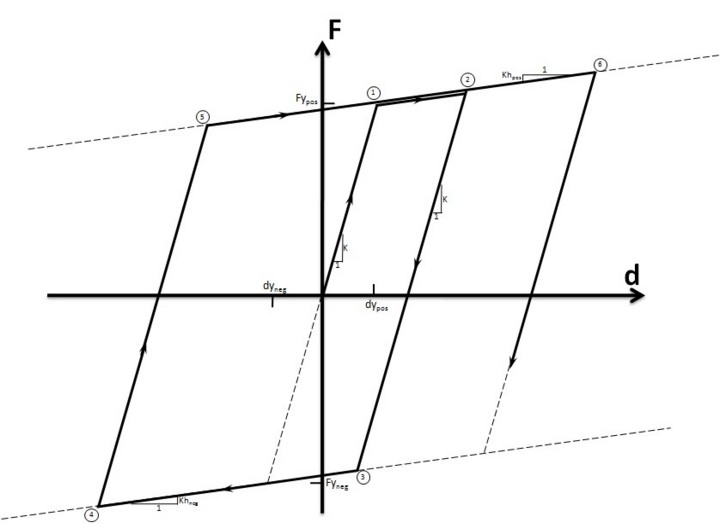
Figure 23: Hysteresis Behavior for a Symmetric Bilinear Model with Hardening
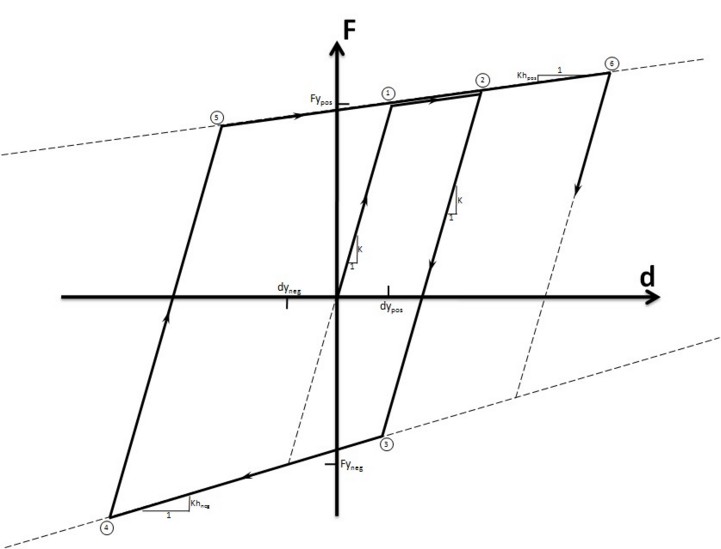
Figure 24: Hysteresis Behavior for an Unsymmetric Bilinear Model with Hardening